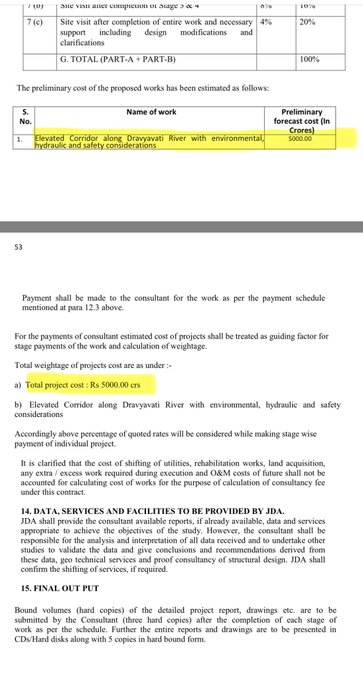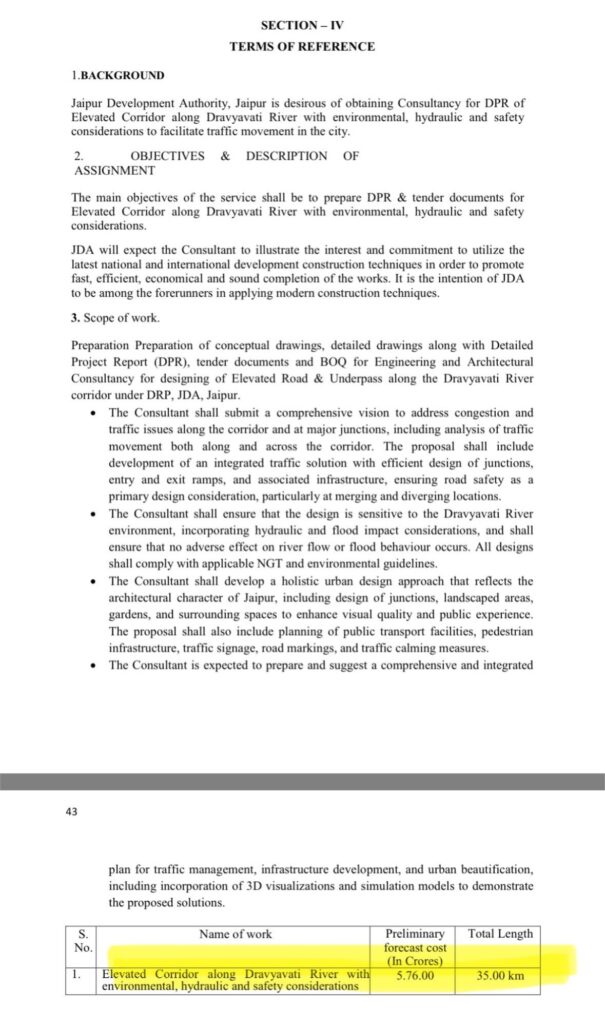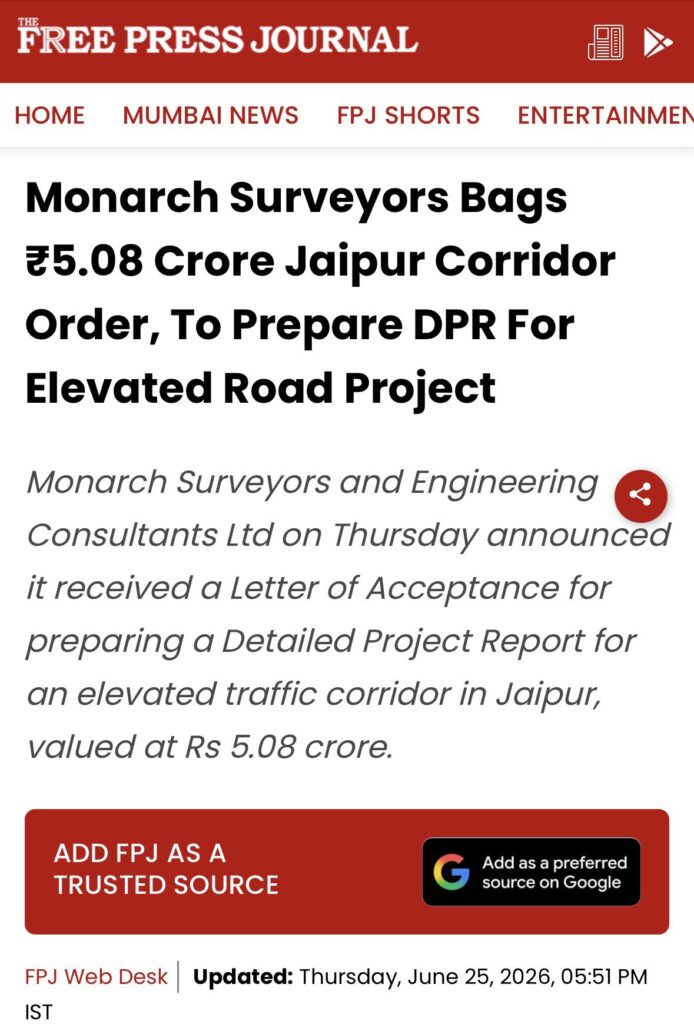

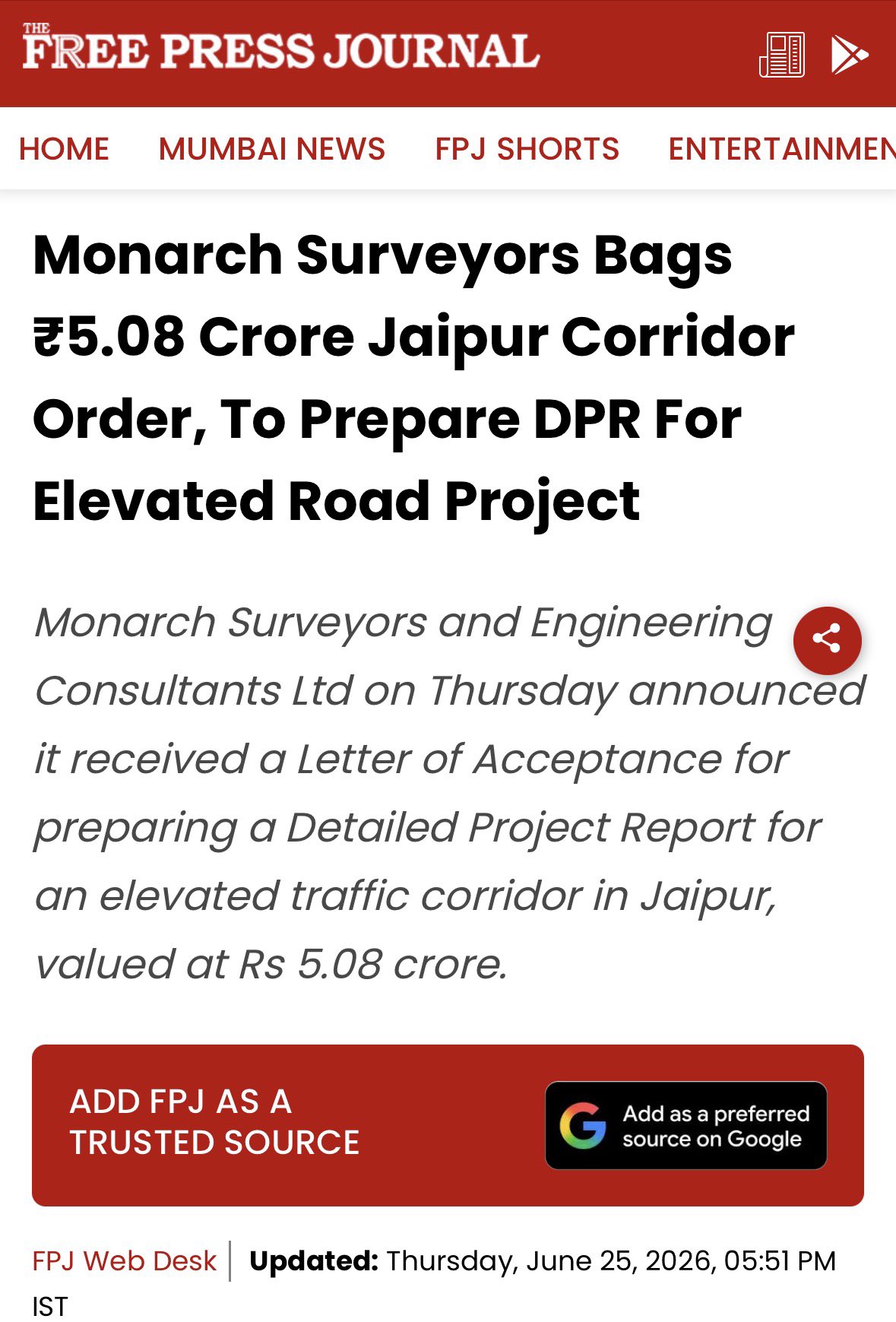
The Seven Wonders Park built in Ajmer’s Ana Sagar Wetland cost approximately ₹100 crore, and it had to be removed following a court order. Now, in Jaipur, a project for a nearly 35–36 kilometer-long elevated corridor along the Dravyavati River, costing around ₹5,000 crore, is being advanced. For this, the JDA has awarded a ₹5.08 crore contract to Monarch Surveyors to prepare the DPR.
The most important point is that the tender document itself states that the project must not violate NGT guidelines and should not adversely affect the natural flow of floods. This makes it clear that the JDA is fully aware of the legal and environmental sensitivities of this project.
Yet the question arises: When the Supreme Court and various judicial decisions have consistently adopted an extremely cautious stance regarding permanent construction in catchment areas and floodplains, why is a new ₹5,000 crore project being proposed in such an area?
The Dravyavati River itself is already the subject of judicial disputes. The ₹1,676 crore Dravyavati River Rejuvenation Project is under the supervision of the Rajasthan High Court. In 2024, the Jaipur Bench had clearly stated that “the right to live in a clean environment is a fundamental right” and directed the JDA to submit regular compliance reports. Additionally, the dispute over whether the land for the river embankment is government or private is still pending in court. In such a situation, initiating a new elevated road project in the same disputed corridor raises several new legal questions.
In M.C. Mehta vs. Kamal Nath (1997), the Supreme Court recognized the Public Trust Doctrine and stated that the state does not own rivers, forests, and other natural resources but holds them as a trustee, and they cannot be arbitrarily altered in the name of development projects.
Similarly, the NGT has consistently reiterated in various cases—Yamnuna (Manoj Mishra case), Ganga, Mansi River, and the recent Panjra River case—that construction in floodplains cannot be justified merely on the grounds of “public interest” or “public utility.”
In the context of the Wetland Rules, 2017, and the Environmental Impact Assessment (EIA) Notification, 2006, it is also a crucial question whether environmental clearance will be mandatory for such a large linear infrastructure project.
The Seven Wonders Park case is an important example in this context. In 2023, the NGT ordered the removal of the park on the grounds of wetland and master plan violations. The state government argued in the Supreme Court that crores of rupees had already been spent on the project, so it should be allowed to remain. But on March 18, 2025, the Supreme Court rejected this argument and clearly stated that the destruction of the wetland is akin to “inviting disaster.” Ultimately, the entire structure had to be demolished in September 2025.
In such a scenario, it is natural to question whether the government is once again preparing to spend thousands of crores on a project carrying similar legal risks? If the court issues an adverse decision on this project in the future, who will bear the financial and environmental responsibility?