Home Blog Page 5

The Fortress of Reservation and the Exile of Ideology

0

Meena Politics: Socialist Roots, Saffron Shade, and the Surging River of Rebellion

In Rajasthan’s politics, the Meena community has become a strange paradox. The tribe, standing as the pivot of constitutional rights, has become the state’s most organized political force, yet today it is being pulled in three different directions: on one side, the BJP’s lure of power; on the other, the Congress’s old shop; and on the third, a new, unorganized but smoldering resistance.

This is not merely an electoral equation. It is a civilizational crisis.

The political consciousness of the Meena community was not forged in fields and farmlands, but in files and courtrooms. After receiving Scheduled Tribe status in 1956, Meena youth in districts like Dausa, Sawai Madhopur, Karauli, and Tonk in eastern Rajasthan saw government jobs as the sole path to liberation. In Rajasthan, a large portion of Scheduled Tribe reservation goes to the Meena community—this fact is as much proof of their organized energy as it is the source of accusations raised against them.

This economic consciousness naturally gave rise to a leftist-socialist tilt. Rights over state resources, constitutional protection, and collective mobility—these values have been the soul of Meena politics. The Congress remained the political expression of this community for decades on this very axis.

Kirodi: A Fire, Now Buried in Ashes

Kirodilal Meena is the “Kirodi Baba” of eastern Rajasthan. He has had deep influence in Meena-dominated districts like Dausa, Sawai Madhopur, and Karauli, and is considered the community’s biggest leader. Kirodi, who fought on the ground for decades against Congress governments, struck a strange deal with the BJP: power in exchange for community.

But the 2024 Lok Sabha elections exacted the price of this deal. Kirodilal Meena had taken responsibility for seven Lok Sabha seats in eastern Rajasthan for the BJP, but the party lost seats like Dausa, Bharatpur, Karauli-Dholpur, and Tonk-Sawai Madhopur. Taking moral responsibility for this defeat, Kirodi resigned from his ministerial post.

Analysts believed that while Kirodi Baba got the agriculture department, influential portfolios like Panchayati Raj were taken away from him. The firebrand leader was gradually realizing that his stature in power was being diminished. This was not just a resignation—it was an expression of the pain of a tribal leader who, even while remaining within the BJP, felt cut off from his roots.

Chief Minister Bhajanlal Sharma could not arrive at any clear decision on Kirodi’s resignation: on one side, the fear of the Meena community’s anger; on the other, pressure from the organization. This dilemma itself reveals how indispensable yet inconvenient the Meena vote is for the BJP.

Naresh Meena: The Politics of Slaps and Their Symbolism

What happened during the Deoli-Uniara by-election in November 2024 was not just an incident—it was a symptom. Independent candidate Naresh Meena publicly slapped a sub-divisional officer in Samarwata village during voting, leading to tension across the entire area. His supporters set fire on the highway.

There is no doubt this was personal recklessness. But behind it lay a deep social discontent. Naresh Meena went to jail, and later sat on an indefinite fast unto death demanding justice in the Jhalawar’s Piplodi school tragedy. This is the paradox of this leader: unrestrained in conduct, yet sensitive to the community’s pain.

In the by-election, Naresh Meena, as an independent candidate, secured nearly 30 percent of the votes to come in second place, leaving Congress behind. This figure shows that in the leadership vacuum created after Kirodi, a large section of the Meena community is ready to embrace any rebellious voice to fill it, no matter how controversial that voice may be.

Ganga Sahay Meena: A New Language of Intellectual Resistance

Where Kirodi and Naresh are products of the political arena, Ganga Sahay Meena comes from an entirely different terrain. An Associate Professor at JNU’s Centre for Indian Languages, hailing from Seva village in Sawai Madhopur district, Ganga Sahay Meena is the founder-editor of the magazine Adivasi Sahitya.

His significance is not merely academic. He represents an intellectual tradition that elevates Meena identity above the debate on reservation, linking it to civilizational questions: forest rights, linguistic identity, the rewriting of tribal history.
PM Surya Ghar Yojana

0

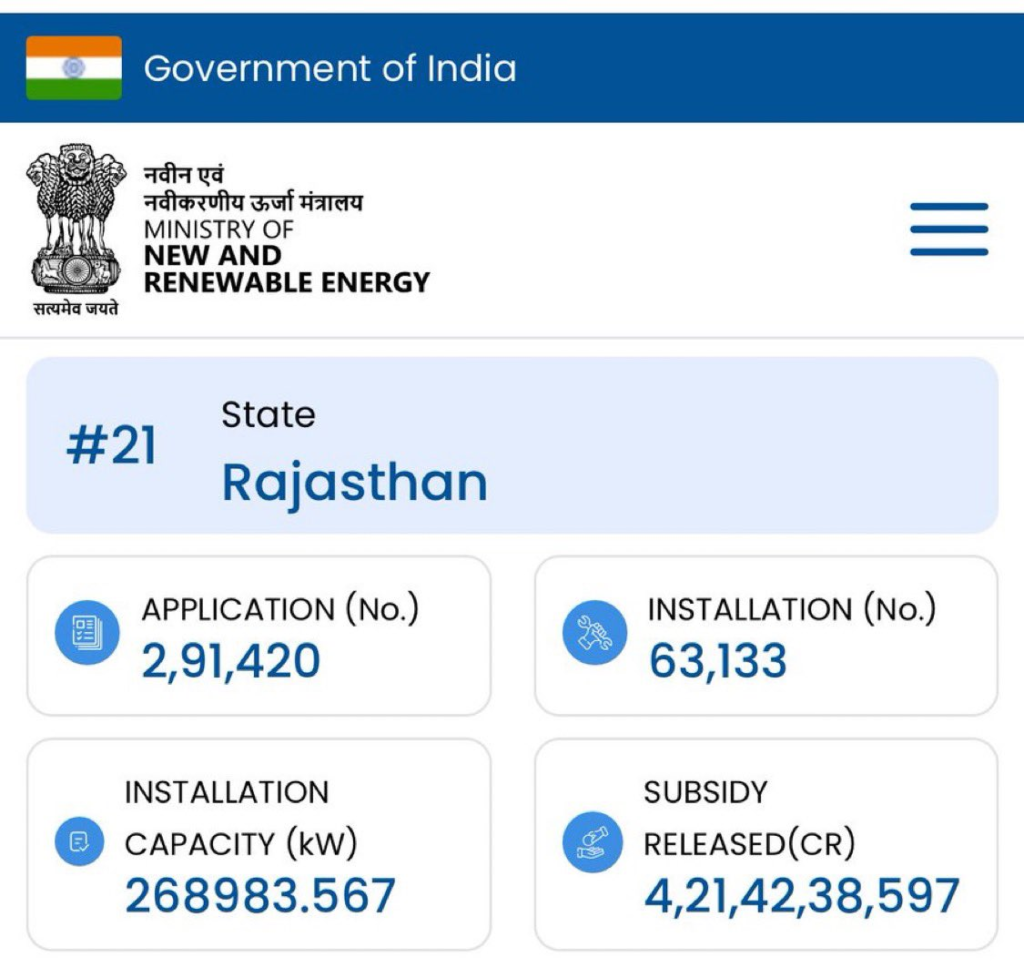
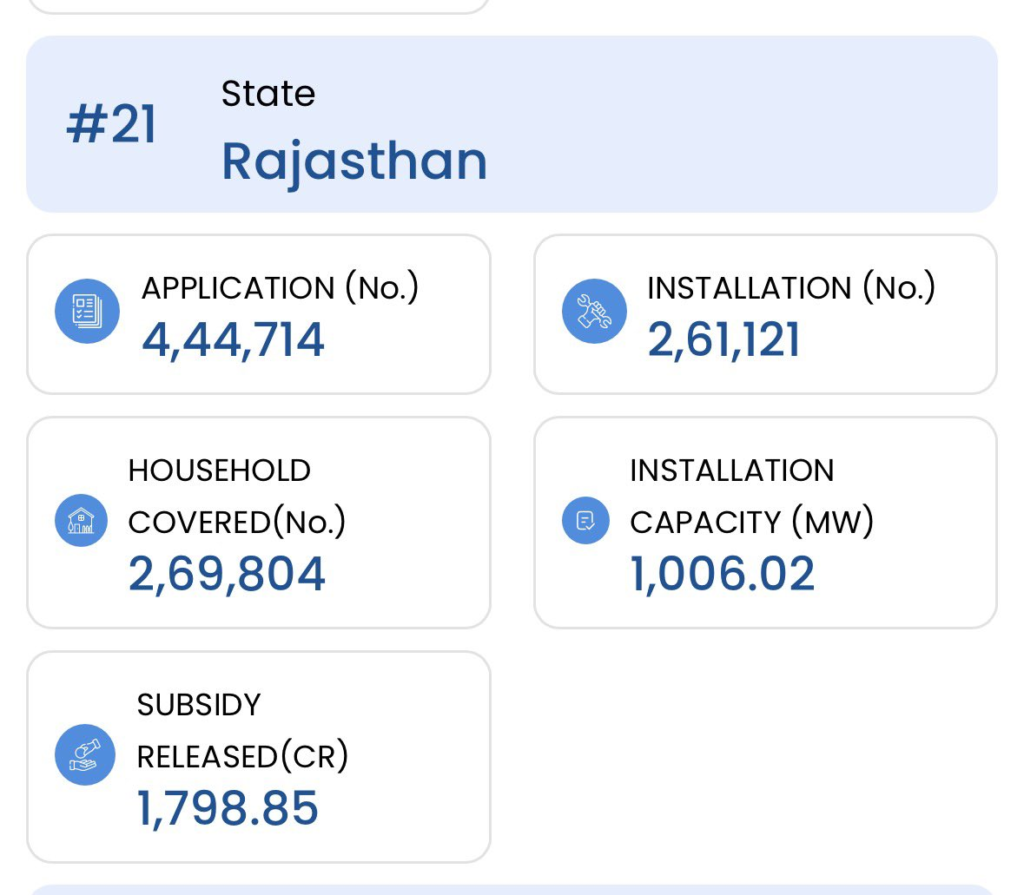
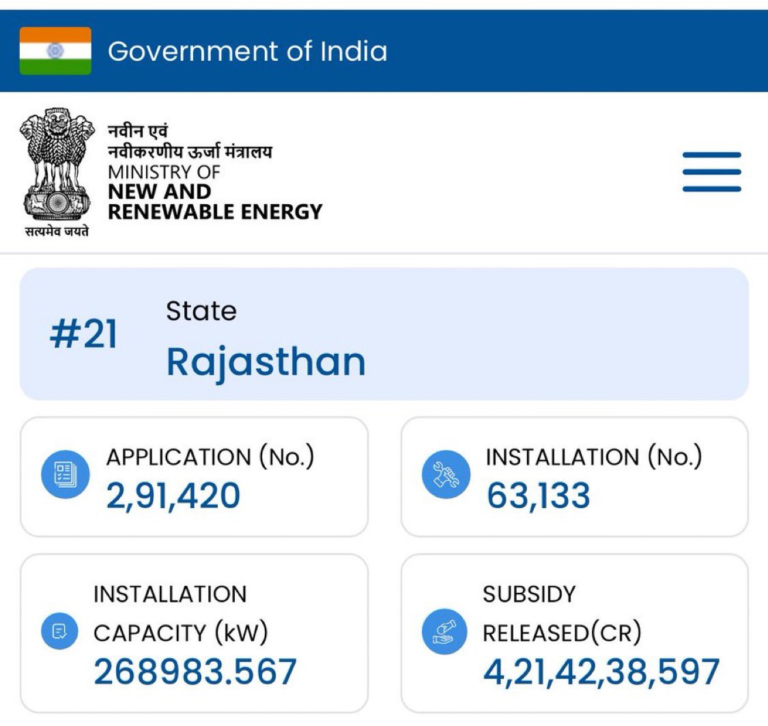
Rajasthan Progress (29 July 2025 – 16 July 2026) Applications: Increased from 2,91,420 to 4,44,714 (+1,53,294; +52.6%). Installations: Rose from 63,133 to 2,61,121 (+1,97,988; +313.6%). Installed Capacity: Increased from 268.98 MW to 1,006.02 MW (+737.04 MW; +274%), crossing the 1 GW milestone. Subsidy Released: Increased from ₹421.42 crore to ₹1,798.85 crore (+₹1,377.43 crore; +327%). Households Covered: 2,69,804 households benefited under the scheme as of 16 July 2026

Unemployment among youth aged 15 to 29 is nearly three times the national average. On the other hand, India presents itself as a global AI and technological power. This is the biggest paradox. The unemployment rate among youth aged 15 to 29 is nearly three times higher than the national average, while the country positions itself as an emerging force in AI and technology. This contradiction means that the “demographic dividend” (youth population) is being prepared for jobs that no longer exist in that form—this is the real fuel behind today’s student movements, far bigger than any single paper leak.

0

What should real change look like? Simply adding a coding class or distributing tablets in schools is not education reform. For genuine transformation, three fundamental changes are essential. First, the single-exam-based system must be abolished. Both China and the United States, in their own ways, are moving evaluation toward continuous and multidimensional assessments spread throughout the entire educational journey. India too should shift from a make-or-break single-day exam to multiple evaluation opportunities, secure digital proctoring, and portfolio-based assessments of students’ actual skills. This would reduce the benefits of cheating and lower the cost of any single paper leak. Second, AI literacy must be made a core part of the curriculum, not an optional add-on. Like in China, the use of AI, understanding its limitations, fact-checking, and critical evaluation should be taught from the early grades. If this doesn’t happen, AI will become a new divide between rich and poor students in India, where affluent families are already giving their children an extra edge through coaching. Third, and most importantly, the mindset that confines education to preparation for limited government jobs must change. Every year, millions of youth chase the same few secure jobs, whose numbers aren’t growing. Instead, skill-based vocational education, industry-linked apprenticeship programs, and flexible systems for re-education or skill acquisition at any stage of life will be far more crucial. If India squanders this opportunity Using tear gas on students cannot be justified in any situation. At the same time, impartial investigations and accountability for incidents like paper leaks are also essential. But if the response to this entire movement is limited to just ousting a minister or introducing new anti-cheating software, India will squander its “historic moment for the Gen Z generation” on superficial reforms. Meanwhile, China is forging ahead in transforming an entire generation into an AI-enabled workforce, while the United States continues to give its private sector the freedom to experiment. The students who have embraced calling themselves “cockroaches” are not just demanding fair exams. They are raising the fundamental question of whether, in today’s world reshaped by artificial intelligence, it is still fair to have a system where one exam, one chance, and ultimately limited secure jobs are the sole purpose of the entire education—while the whole world is being transformed by artificial intelligence. India must not just give them better exams, but rebuild the entire education system.

Dharmendra Pradhan’s resignation means the cockroaches are right: India doesn’t need better exams, but a new education system

0

For the past several weeks, New Delhi’s Jantar Mantar has been filled with youth. They call themselves the “Cockroach People’s Party”—a name once used as an insult, but which they have turned into a symbol of their identity and resistance. Their movement isn’t against just one leaked question paper; it’s against the entire education system.

The NEET exam was canceled and re-conducted following allegations of a paper leak. Irregularities were also alleged in CBSE’s on-screen evaluation system. Over the past decade, there have been more than a hundred paper leak incidents, affecting the futures of millions of students. Tear gas was fired at teenagers peacefully protesting with the Constitution in hand. This scene alone should be signal enough for policymakers that this isn’t mere anger over administrative lapses—it’s a generation’s rebellion against a system built on rote memorization, a single day’s exam, and promises of limited government jobs.

The central government’s first response will likely be the same again: a new proctoring system to prevent leaks, a more secure question bank, or the exit of a few officials. But that would be the biggest mistake. These protests are just symptoms; the disease runs much deeper.

India’s exam culture is still a relic of that industrial age, when a single exam, on a single day, with a single result could determine a young person’s entire life. Yet today’s economy demands jobs that seek adaptability, decision-making skills, and the ability to work with AI tools—none of which are tested for, nor systematically taught.

If India wants to understand what the education of the future should look like, it must carefully examine the diverse models emerging around the world.

Two Models, One Crossroads

China has embraced AI not as an elective subject, but as the foundation of its education infrastructure. Under its national “AI+ Education” initiative, launched as part of the 15th Five-Year Plan in 2026, AI literacy becomes mandatory from primary school onward, with a goal of developing a fully integrated AI education system by 2030.

This isn’t just policy—it’s ground reality. By the end of 2025, Beijing claimed that nearly 88 percent of its schools had begun using AI. In cities like Shenzhen, students receive at least one AI-focused lesson every month. In a Beijing secondary school, AI analyzes weeks of homework and quizzes to identify students’ weaknesses and generates personalized practice exercises, which teachers refine and implement.

China’s stated goal isn’t for students to blindly trust AI, but to learn to use it like a co-pilot—a tool whose advice they scrutinize, verify, and challenge when necessary.

In contrast, America has taken a more decentralized, market-driven path. It’s promoting AI research at the federal level, industry-education partnerships, and teacher training, but implementation varies across states and districts.

In America, the debate around AI in education remains largely defensive, focused on catching cheating and maintaining academic integrity. A uniform national strategy for teaching AI as a life skill hasn’t yet materialized.

The strength of this model is its flexibility and freedom for innovation, but its biggest weakness is that it widens the gap between resource-rich and resource-poor schools.

India, for now, isn’t moving in either direction. Here, an “exam industry” has taken root, where high-stakes tests like NEET, JEE, and UPSC have become gateways to limited opportunities. A massive coaching industry has sprung up around them, extracting a heavy financial toll from families so their children can prepare for that one day’s exam.

“India’s Power Sector Game Changer has Arrived!!

“Thermal-mimic” FDRE RTC (firm and dispatchable renewable energy, round-the-clock) power is now available in India at Rs 5.25/kWh ($55/MWh) – flat for 25 years!!

Solar Energy Corporation of India Limited’s FDRE RTC results were just announced.

Key specifications: 90% during peak hours, 50% during solar-hours, and 70% during non-peak, non-solar hours – every single day, enforced at every 15-minute interval. Exactly how a thermal plant would operate.

This is a big deal for two reasons:

  1. Incredibly competitive price – among the lowest in the world.
  2. But the more interesting part is that the price is flat and inflation-proof!

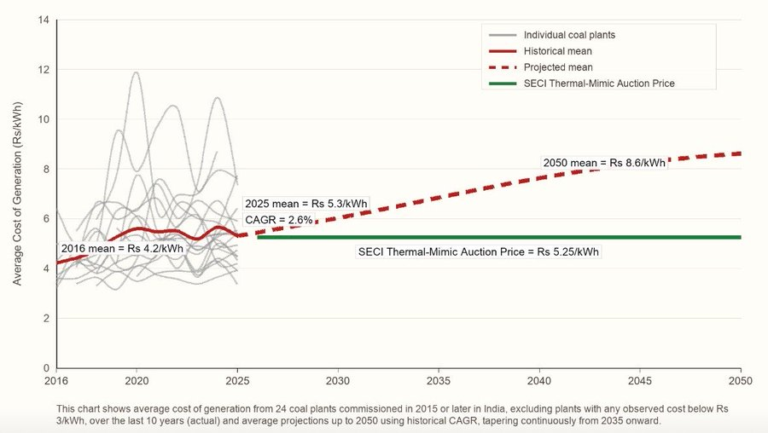
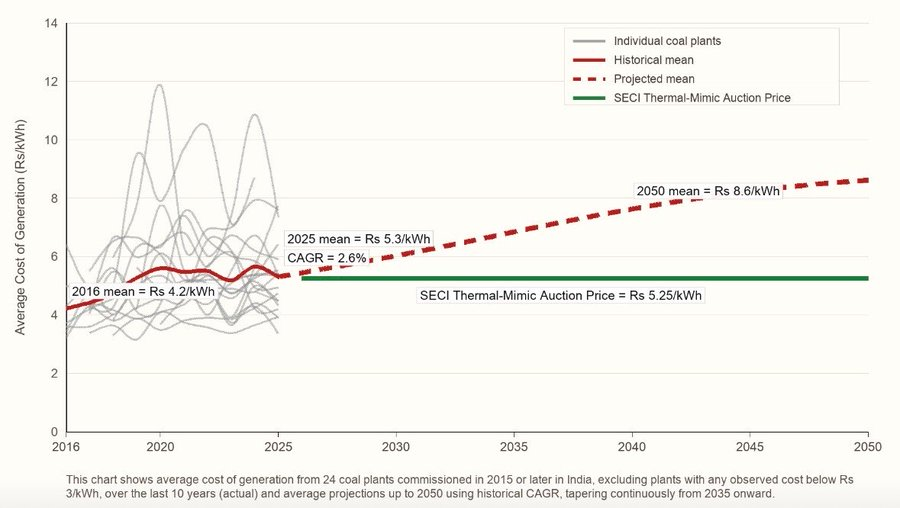
The chart shows actual average generation cost for every new coal plant commissioned in India since 2015 — about 39 GW. That fleet’s average cost has gone from roughly Rs 4.2/kWh ($45/MWh) in 2016 to Rs 5.3/kWh ($56/MWh) in 2025, with some newer plants costing significantly above that number.

If that trend continues at even a tapering rate after 2035, new coal would average about Rs 8.6/kWh ($90/MWh) by 2050.

The green line is the Thermal-mimic clean power at Rs 5.25/kWh, and it doesn’t move. Fixed in nominal Rupees for 25 years!!

That means clean firm power is already brushing up against coal prices, before accounting for fuel price volatility or carbon risk.

The question isn’t whether clean power can be firm and competitive. It’s both.”

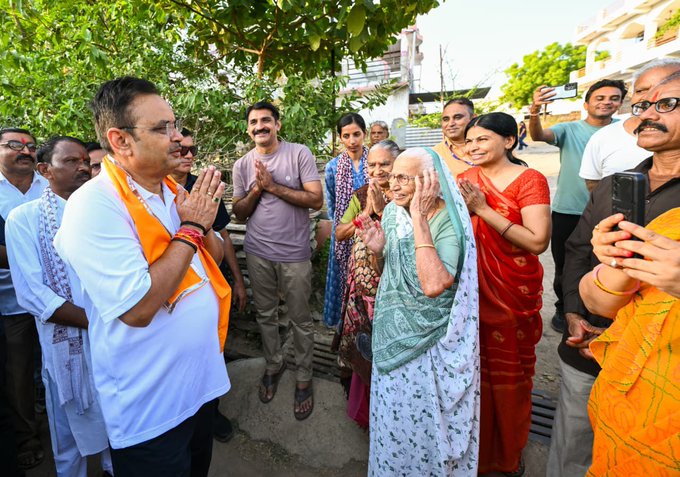
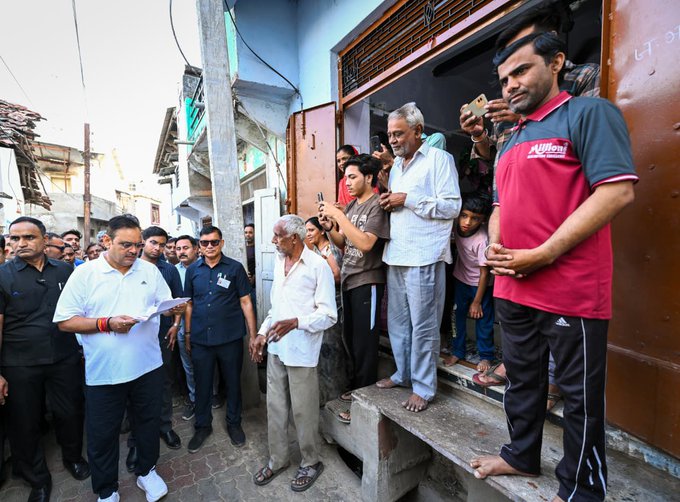
Chief Minister Bhajan Lal Sharma’s village tours and night chaupals are commendable efforts to connect directly with the people and listen to their concerns. This builds trust and a positive atmosphere in the villages. However, the true success of this initiative will depend on its administrative follow-through, not just its optics.

0

Currently, the discussions at these chaupals tend to be lengthy and scattered, with people raising political demands, questions related to government schemes, and everyday grievances all at once. This makes it difficult to arrive at clear and timely decisions on critical issues. Therefore, it is essential that, before every chaupal, the district administration prepares a clear and concise summary of all pending complaints from towns and villages and submits it to the Chief Minister in advance. This way, the Chief Minister will be able to make well-considered and correct decisions rather than reacting on the spot.

Additionally, the discussions at the chaupals should be divided into separate groups, such as dedicated time slots for women, farmers, youth, and service recipients. This will allow each group’s concerns to be heard attentively and without the chaos of overcrowding.

An Action Taken Report should be issued within 48 hours of every chaupal, so that people can see what steps have been taken on their issues. This will base public trust not just on the Chief Minister’s presence, but on timely and concrete solutions.

After the ₹100 Crore Waste on the Seven Wonders at Ajmer’s Ana Sagar Wetland, Is ₹5,000 Crore Now at Stake on the Elevated Road Over Jaipur’s Dravyavati River?

0

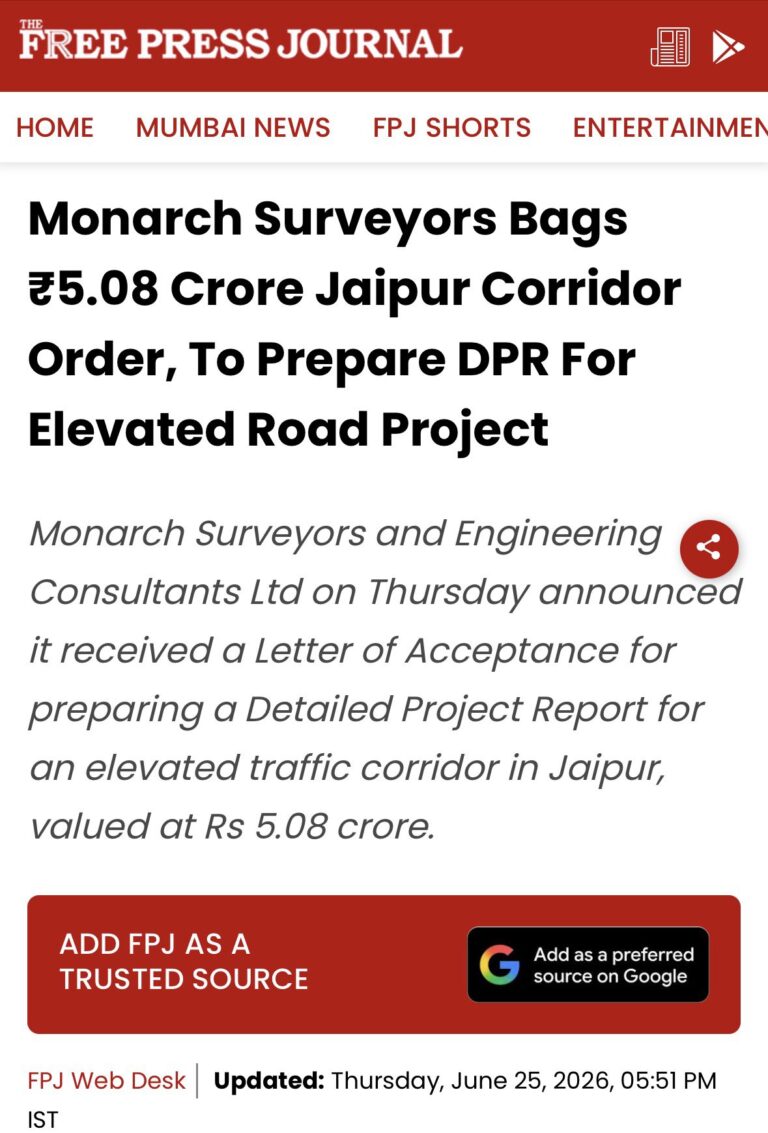
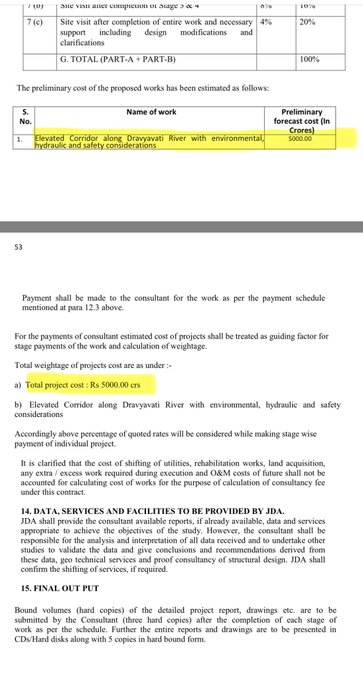
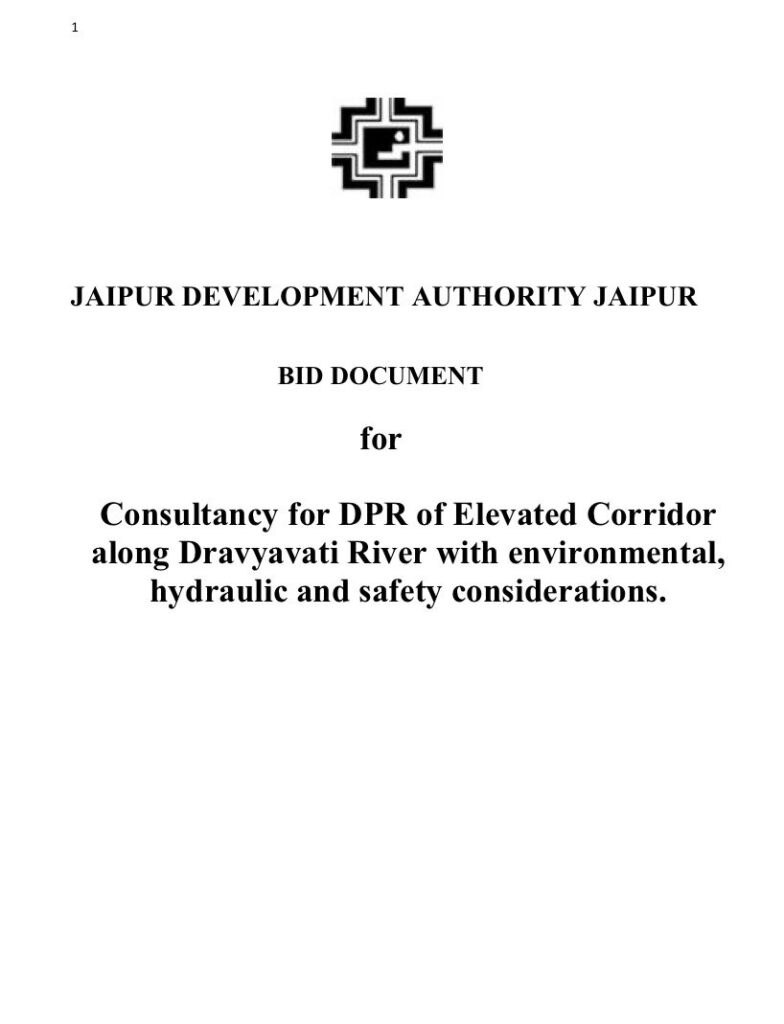
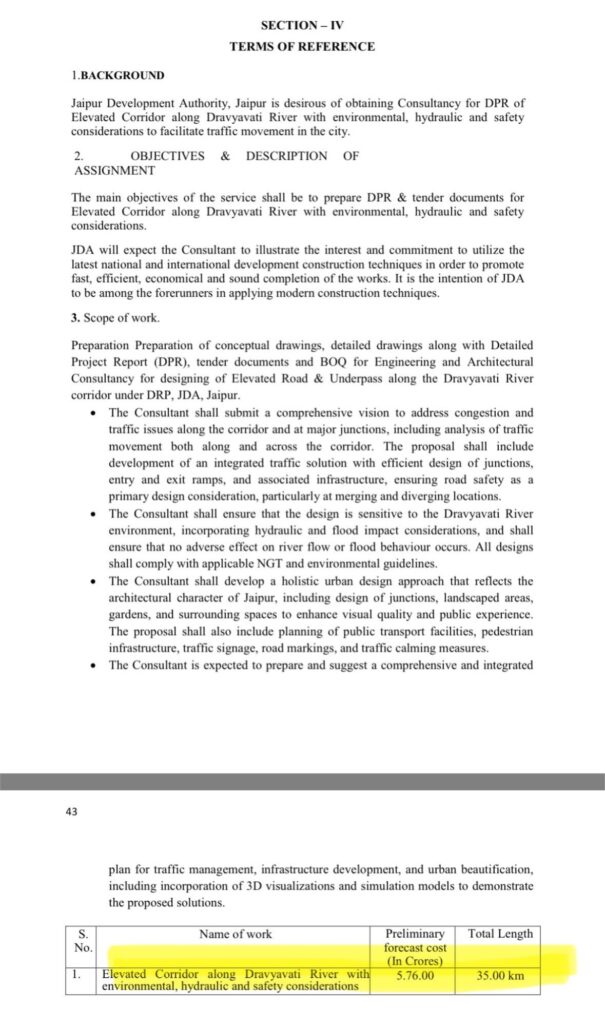
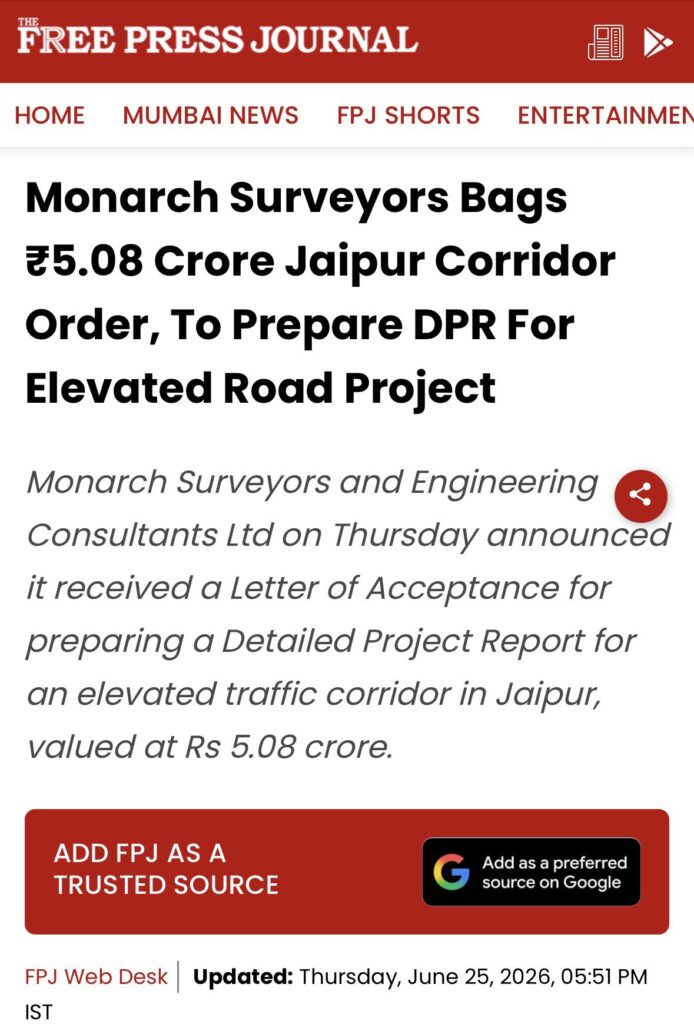
The Seven Wonders Park built in Ajmer’s Ana Sagar Wetland cost approximately ₹100 crore, and it had to be removed following a court order. Now, in Jaipur, a project for a nearly 35–36 kilometer-long elevated corridor along the Dravyavati River, costing around ₹5,000 crore, is being advanced. For this, the JDA has awarded a ₹5.08 crore contract to Monarch Surveyors to prepare the DPR.

The most important point is that the tender document itself states that the project must not violate NGT guidelines and should not adversely affect the natural flow of floods. This makes it clear that the JDA is fully aware of the legal and environmental sensitivities of this project.

Yet the question arises: When the Supreme Court and various judicial decisions have consistently adopted an extremely cautious stance regarding permanent construction in catchment areas and floodplains, why is a new ₹5,000 crore project being proposed in such an area?

The Dravyavati River itself is already the subject of judicial disputes. The ₹1,676 crore Dravyavati River Rejuvenation Project is under the supervision of the Rajasthan High Court. In 2024, the Jaipur Bench had clearly stated that “the right to live in a clean environment is a fundamental right” and directed the JDA to submit regular compliance reports. Additionally, the dispute over whether the land for the river embankment is government or private is still pending in court. In such a situation, initiating a new elevated road project in the same disputed corridor raises several new legal questions.

In M.C. Mehta vs. Kamal Nath (1997), the Supreme Court recognized the Public Trust Doctrine and stated that the state does not own rivers, forests, and other natural resources but holds them as a trustee, and they cannot be arbitrarily altered in the name of development projects.

Similarly, the NGT has consistently reiterated in various cases—Yamnuna (Manoj Mishra case), Ganga, Mansi River, and the recent Panjra River case—that construction in floodplains cannot be justified merely on the grounds of “public interest” or “public utility.”

In the context of the Wetland Rules, 2017, and the Environmental Impact Assessment (EIA) Notification, 2006, it is also a crucial question whether environmental clearance will be mandatory for such a large linear infrastructure project.

The Seven Wonders Park case is an important example in this context. In 2023, the NGT ordered the removal of the park on the grounds of wetland and master plan violations. The state government argued in the Supreme Court that crores of rupees had already been spent on the project, so it should be allowed to remain. But on March 18, 2025, the Supreme Court rejected this argument and clearly stated that the destruction of the wetland is akin to “inviting disaster.” Ultimately, the entire structure had to be demolished in September 2025.

In such a scenario, it is natural to question whether the government is once again preparing to spend thousands of crores on a project carrying similar legal risks? If the court issues an adverse decision on this project in the future, who will bear the financial and environmental responsibility?

Jaipur’s Government Land Worth ₹1000 Crore Exposed in Settlement Fraud Scandal!

0

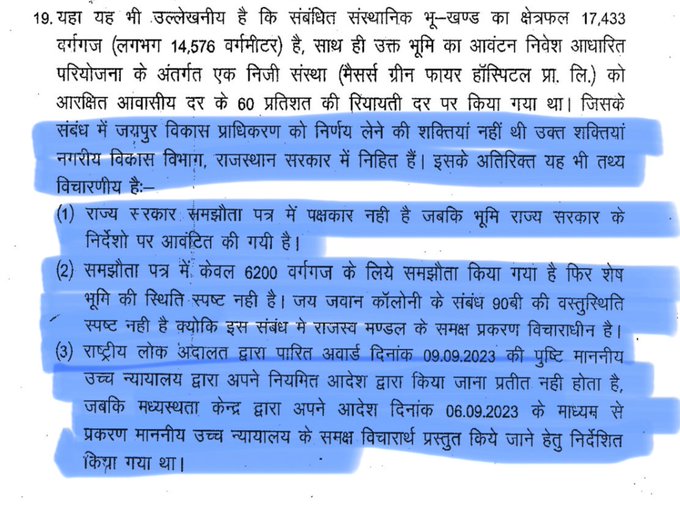
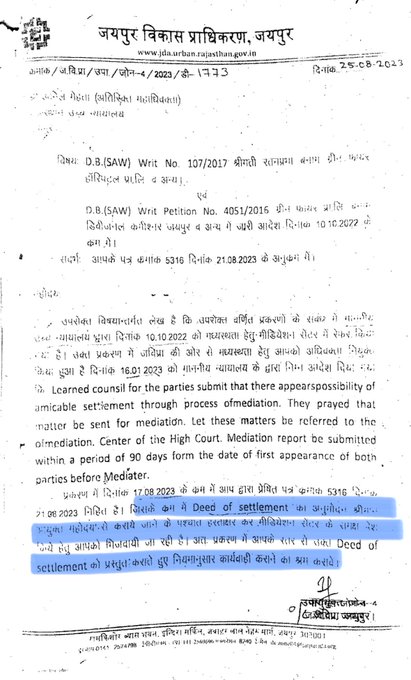
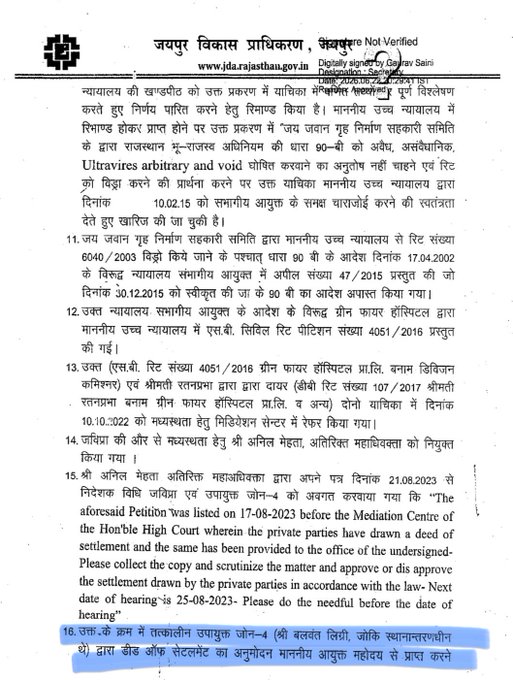
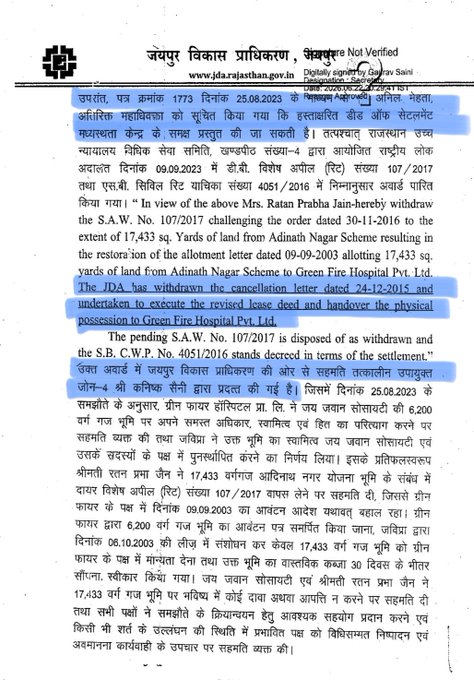
The Rajasthan government has itself approached the High Court regarding the 23,600 square yards of prime land right opposite World Trade Park (WTP) on JLN Marg, with allegations that JDA officials colluded to keep the government in the dark. What is the case? In 2003, this land was allotted to Green Fire Hospital Pvt. Ltd. at a concessional rate to build a multi-specialty hospital. In 2015, the allotment was canceled due to violation of conditions, and the money was also refunded. But in 2023, a sudden “settlement” took place, and the National Lok Adalat passed such an award that revived the already canceled allotment. 17,433 square yards of land back to Green Fire Hospital 6,200 square yards of land to Jai Jawan Grih Nirman Sahakari Samiti and Ratan Prabha Jain Government’s Allegations No approval from the Cabinet was taken The UDH department was not informed No authorized representative of the government was involved in the agreement The government claims that the then JDA Commissioner and Zone-4 DC had no legal authority to enter into such an agreement, yet private parties were directly benefited. The shocking part is that the Lok Adalat did not even verify whether the necessary parties (especially the state government) were involved in the agreement or not. How did the government get wind of it? In 2026, when Green Fire Hospital filed a contempt petition for non-compliance with the award, that’s when the government dug into the records, and the entire game came to light. Allegations are that information about pending cases was concealed, incomplete facts were presented, and efforts were made to suppress the investigation by hastily withdrawing the JDA Tribunal case. The High Court has ordered the preservation of all records. The joint hearing of the contempt petition, both public interest litigations, and related cases is scheduled for July 20.