Home Blog Page 8

The Smart Cities Mission sounds ambitious, but the math exposes its limits: ₹59,385 crore for 31 cities → ₹1,915 crore per citySpread over 10 years → just ₹191 crore annually.

0

The Smart Cities Mission sounds ambitious, but the math exposes its limits: ₹59,385 crore for 31 cities → ₹1,915 crore per city
Spread over 10 years → just ₹191 crore annually.
For an average 20 lakh population, that is barely ₹955 per person per year not enough to fix core infrastructure, let alone build a “smart city.” At best, it funds cosmetic retrofitting.

By 2035, nearly 65% of Indians about 900+ million people will live in cities. Existing systems are already overstretched. To make cities livable and future-ready, India needs Capex of at least $1 trillion (₹90 lakh crore+) in the next decade.
Current investment is short by 10–15x, leaving urban India critically underfunded.

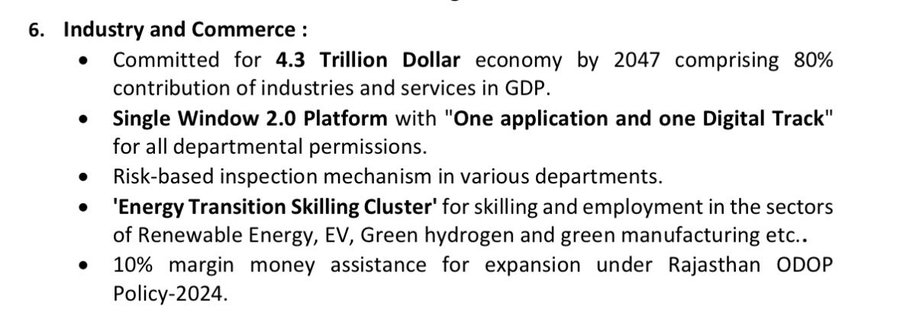
Rajasthan Govt announced an ambitious target of $4.3 trillion GDP by 2047. While this demonstrates bold vision, the underlying math reveals significant challenges worth examining.

0

If India achieves its projected $30+ trillion economy by 2047, Rajasthan capturing $4.3 trillion would mean holding a 14%+ share nearly triple its current 5.26%. This would require sustaining 14-15% annual growth for 22 consecutive years, a feat that’s historically unprecedented for a regional economy of this scale.

A more grounded assessment suggests a different trajectory with sustained 10-12% growth which itself represents strong performance Rajasthan could realistically reach $1.5-2 trillion by 2047. This would elevate its share to approximately 6-7% of India’s national economy, effectively doubling its current economic weight.

The $4.3 trillion figure serves an important purpose as an aspirational benchmark driving policy ambition, attracting investment, and mobilizing resources. However, the $1.5-2 trillion range represents where tangible transformation occurs enhanced infrastructure, expanded manufacturing capacity, rising household incomes, and measurably improved living standards.

Notably, even reaching $2 trillion would require Rajasthan to slightly outpace India’s overall growth (approximately 10.5-11% CAGR) challenging but achievable with focused execution.

प्रीपेड स्मार्ट मीटर की बाध्यता: केंद्र, राज्य और उपभोक्ता का दृष्टिकोण

0

किसी भी अधिनियम को लागू करने के लिए अधिकृत संस्थाओं को नियम और विनियम बनाने का अधिकार होता है। ये नियम एवं विनियम मूल अधिनियम के अनुरूप (संगत) होना आवश्यक है। भारतीय विद्युत अधिनियम, 2003 की धारा 47 की उपधारा (1) और (5) के अनुसार विद्युत उपभोक्ताओं को पोस्ट-पेमेंट और प्री-पेमेंट दोनों का विकल्प दिया गया है। अतः इस अधिनियम के अंतर्गत बनाए गए कोई भी नियम या विनियम उपभोक्ता को केवल प्रीपेड मोड में बिजली लेने के लिए बाध्य नहीं कर सकते। धारा 55(1) के तहत प्राधिकरण को उपभोक्ताओं के यहाँ मीटर स्थापित करने के संबंध में विनियम बनाने का अधिकार है। धारा 177(2)(ग) के अंतर्गत प्राधिकरण को मीटर के संस्थापन और संचालन से संबंधित नियम बनाने की शक्ति दी गई है। लेकिन यह भी आवश्यक है कि ये नियम मूल अधिनियम के अनुरूप हों। चूंकि मूल अधिनियम उपभोक्ताओं को पोस्टपेड और प्रीपेड दोनों का विकल्प देता है, अतः केवल प्रीपेड मोड को अनिवार्य बनाना मूल अधिनियम से असंगत होगा। यह बात सही है कि प्राधिकरण मीटरों में प्रीपेड फीचर अनिवार्य कर सकता है और उपभोक्ताओं के यहाँ ऐसे मीटर लगाने हेतु नियम जारी कर सकता है जिनमें यह सुविधा हो। मीटरिंग विनियम (संशोधित) 2019 के खंड 4(1)(ख) के अनुसार, मीटरों में प्रीपेड सुविधा होना अनिवार्य है, प्रीपेड मोड में इंस्टॉल करना नहीं। इलेक्ट्रिसिटी कंज़्यूमर्स राइट्स रूल्स, 2020 में भी स्मार्ट प्रीपेड मीटर की सुविधा (feature) को अनिवार्य किया गया है, लेकिन प्रीपेड मोड में इंस्टॉल करना नहीं। मीटर विनियम 2006 के खंड 2(R) को 2019 के संशोधन में हटा दिया गया है। प्रीपेड सुविधा को अनिवार्य इसलिए किया गया है ताकि उपभोक्ताओं को यह विकल्प मिल सके, जैसा कि मूल अधिनियम में प्रावधान है। इसलिए संबंधित अधिकारियों को इन विनियमों और नियमों का दोबारा अध्ययन करना चाहिए और यह स्पष्ट करना चाहिए कि क्या अनिवार्यता केवल प्रीपेड फीचर की है या प्रीपेड मोड में मीटर इंस्टॉल करने की भी? मुख्य प्रश्न: 1.क्या अगस्त 2021 में भारत सरकार द्वारा सभी उपभोक्ताओं के यहाँ प्रीपेड मोड में मीटर स्थापित करने की अधिसूचना भारतीय विद्युत अधिनियम 2003 के अनुरूप और उचित है? 2.जब विद्युत अधिनियम 2003 उपभोक्ताओं को प्रीपेड विकल्प चुनने का अधिकार देता है, तो सभी स्मार्ट मीटरों में प्रीपेड फीचर को अनिवार्य करना कहाँ तक उचित है? क्या प्रीपेड फीचर वाला स्मार्ट मीटर केवल उन्हीं उपभोक्ताओं के यहाँ नहीं लगना चाहिए जो यह विकल्प चुनते हैं? 3.क्या केंद्र सरकार का राज्यों को यह निर्देश देना कि वे सभी उपभोक्ताओं के यहाँ प्रीपेड मोड में स्मार्ट मीटर लगाएं (जो कि मूल अधिनियम से असंगत है), उचित है? स्मार्ट मीटरों को प्रीपेड फीचर के साथ स्थापित करने पर लगभग ₹10,000 से ₹12,000 करोड़ का अतिरिक्त व्यय राज्यों/डिस्कॉम्स/उपभोक्ताओं पर आएगा। क्या केवल ₹5,000–₹6,000 करोड़ की आरडीएसएस ग्रांट के लिए ₹10,000–₹12,000 करोड़ खर्च करना उचित है? 4.क्या राज्य सरकारों/डिस्कॉम अधिकारियों ने यह मूल्यांकन किया है कि इतने भारी खर्च से डिस्कॉम को उसके अनुपात में लाभ होगा? या यह केवल एक दावा है? क्या कोई सक्षम अधिकारी इसकी गारंटी दे सकता है?

जयपुर को 2055 तक 138 किलोमीटर के मेट्रो नेटवर्क से जोड़ने की कवायद है। आज केंद्रीय कैबिनेट से Phase-2 की मंजूरी मिलने के बाद प्रहलादपुरा से टोड़ी मोड़ तक 42.8 km के इस कॉरिडोर को 2031 तक पूरा करने की डेडलाइन तय की गई है।

0

जयपुर को 2055 तक 138 किलोमीटर के मेट्रो नेटवर्क से जोड़ने की कवायद है। आज केंद्रीय कैबिनेट से Phase-2 की मंजूरी मिलने के बाद प्रहलादपुरा से टोड़ी मोड़ तक 42.8 km के इस कॉरिडोर को 2031 तक पूरा करने की डेडलाइन तय की गई है।

इसके बाद Phase-3 में चार कॉरिडोर ट्रांसपोर्ट नगर से जगतपुरा(17 km), अजमेर रोड चौराहा से कालवाड़ रोड (8.5 km), कनकपुरा से झालाना डूंगरी (16.3 km) और ISBT हीरापुरा से बालाजी मोड़ (16 km) कुल 57.8 km के नेटवर्क को 2041 तक पूरा किया जाएगा ।

Phase-4 में जगतपुरा से खातीपुरा रेलवे स्टेशन (6.5 km), गलता जी से आमेर तक टूरिस्ट कॉरिडोर (9.5 km), ट्रांसपोर्ट नगर से बगराना(10.4 km) और कालवाड़ रोड से लक्ष्मी नारायणपुरा (11.1 km) यानी 37.5 km का विस्तार 2055 तक प्रस्तावित है।​​​​​​​​​​​​​​​​

जयपुर को वर्ष 2031 तक शहरी यातायात और मोबिलिटी सिस्टम के लिए ₹19,035.9 करोड़ की आवश्यकता आंकी गई है। इसमें से ₹14,980 करोड़ की लागत वाले मेट्रो फेज-2 को कल केंद्रीय मंत्रिमंडल की मंजूरी मिल चुकी है। इसके अतिरिक्त इन परियोजनाओं के लिए फंड आना बाकी है।

0

•550 इलेक्ट्रिक बसें: ₹793 करोड़
•6 नए बस डिपो: ₹300 करोड़
•150 बस शेल्टर (निर्माण + पुनरुद्धार): ₹90 करोड़
•फ्रेट/ट्रक टर्मिनल: ₹140 करोड़
•आउटर रिंग रोड: ₹1,040 करोड़
•सड़क चौड़ीकरण: ₹500 करोड़
•ROB/RUB: ₹350 करोड़

  • फ्लाइओवर -अंडरपास: ₹600 करोड़
    •फुटपाथ विकास: ₹40 करोड़
    •पैदल यात्री एवं सिविल इंजीनियरिंग सुधार: ₹27 करोड़
    •जियोमेट्रिक इम्प्रूवमेंट: ₹22.5 करोड़
    •मल्टी-लेवल पार्किंग ऑन-स्ट्रीट पार्किंग जोन: ₹68 करोड़
    •इंटीग्रेटेड कमांड एंड कंट्रोल सेंटर (ICCC): ₹50 करोड़
    •एडेप्टिव ट्रैफिक सिग्नल जंक्शन: ₹25 करोड़

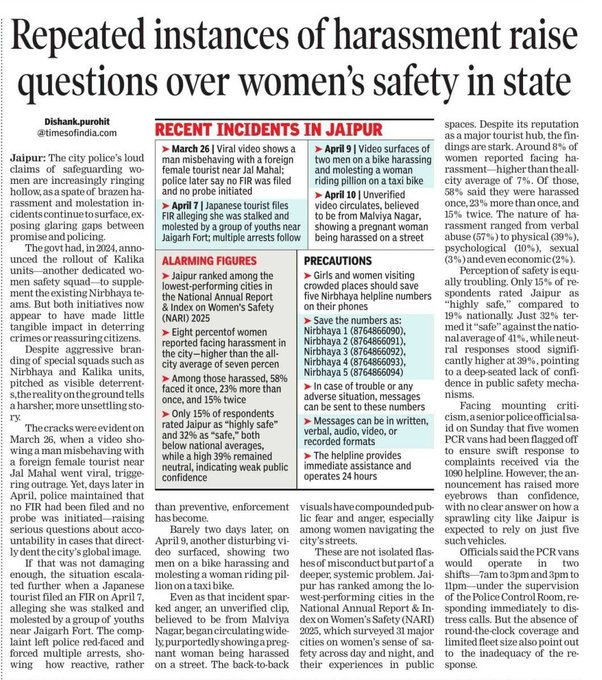
जयपुर मोलेस्टेशन केस ने यह साफ कर दिया कि समाज का सबसे डरावना हिस्सा अपराधी का व्यवहार नहीं, बल्कि आस-पास खड़ी भीड़ की चुप्पी है।

0

जयपुर मोलेस्टेशन केस ने यह साफ कर दिया कि समाज का सबसे डरावना हिस्सा अपराधी का व्यवहार नहीं, बल्कि आस-पास खड़ी भीड़ की चुप्पी है। लोग देखते हैं, समझते हैं, लेकिन बोलते नहीं। लॉ एंड ऑर्डर का अर्थ सिर्फ गिरफ्तारी नहीं है। जब तक राजस्थान पुलिस “कम्युनिटी आउटरीच” को अपने मैंडेट का हिस्सा नहीं मानती, महिलाओं की “फ्री रोमिंग” एक सपना ही रहेगा।

राजस्थान में महिला सुरक्षा का असली संघर्ष कानून-व्यवस्था से ज़्यादा मानसिकता से है और मानसिकता बचपन में बनती है। स्कूलों में पुलिस का आउटरीच आज भी औपचारिकता से आगे नहीं बढ़ पाया, जबकि लड़कों को कॉन्सेंट और रिस्पेक्ट का पाठ पढ़ाना और लड़कियों को अपने अधिकारों व आत्मरक्षा के बारे में जागरूक करना भविष्य की सुरक्षा संस्कृति का पहला कदम है।

राजस्थान पुलिस का “अभय ” कार्यक्रम कागज़ पर है, ज़मीन पर नहीं। हर ज़िले में जेंडर सेंसिटाइज़ेशन ट्रेनर्स की अनिवार्य तैनाती, सालाना 20 स्कूल सत्र, और थानों में महिला मित्र सैल यह सब फाइलों में नहीं, हकीकत में उतरना चाहिए। आज भी जयपुर की चार दिवारी से लेकर जोधपुर के सदर बाज़ार तक, रात नौ बजे के बाद महिलाओं की मौजूदगी अचानक गायब हो जाती है यह सामान्य नहीं डर का मानचित्र है।

इस डर को मिटाने का तरीका स्पष्ट है हर महीने महिलाओं, पुलिस और नगर निगम की सेफ्टी वॉक जिसमें महिलाएँ खुद बताएं कि कौन-सी गली अंधेरी और कौन-सी जगह असुरक्षित लगती है, जिसका 60 दिनों में ठोस समाधान हो। लेकिन सबसे गहरी पीड़ा यह है कि कई बार अपराध से ज़्यादा डरावनी होती है समाज की चुप्पी जयपुर मोलेस्टेशन केस में जैसे भीड़ ने देखा, समझा, पर बोला नहीं। इसलिए राजस्थान को तुरंत एक बड़े पैमाने का बायस्टैण्डर इंटरवेंशन प्रोग्राम करना चाहिए

“देखो, समझो, बोलो” जहाँ हर मोहल्ले, हर बाज़ार में लोगों को हस्तक्षेप करने की ज़िम्मेदारी सिखाई जाए, और पुलिस का बीट कॉन्स्टेबल इस परिवर्तन का वाहक बने। यह तब तक संभव नहीं जब तक कम्युनिटी आउटरीच को SP और DySP की एसीआर का हिस्सा नहीं बनाया जाता, और पदोन्नति सीधे इस काम से नहीं जोड़ी जाती।

सुधार का असली नाम जवाबदेही है और राजस्थान की महिला तब तक सुरक्षित नहीं होगी जब तक वह आधी रात को अकेले निकले और एक बार भी पीछे मुड़कर देखने की ज़रूरत महसूस न करे क्योंकि वही दिन होगा जब पुलिसिंग नहीं, समाज की आत्मा बदली होगी।

भारत में स्वास्थ्य सेवा अब सेवा नहीं, लूट का तंत्र बन चुकी है

0

दवा कंपनियाँ डॉक्टरों को कमीशन, विदेश यात्राएँ और महँगे तोहफे देकर अपनी ब्रांडेड दवाएँ लिखवाती हैं जबकि वही दवा जेनेरिक रूप में दसवें हिस्से की कीमत पर उपलब्ध होती है। डॉक्टर मरीज़ को उस लैब, उस डायग्नोस्टिक सेंटर भेजते हैं जहाँ से उन्हें हर टेस्ट पर 20 से 40 प्रतिशत का कट मिलता है। मरीज़ की ज़रूरत नहीं, डॉक्टर की कमाई देखी जाती है। बड़े कॉर्पोरेट अस्पताल अपने डॉक्टरों को मासिक राजस्व का टारगेट देते हैं और टारगेट पूरा करने के लिए ग़ैर-ज़रूरी ऑपरेशन, ICU में भर्ती और लंबे इलाज की दबाव रहता है। मेडिकल की पढ़ाई में दाखिले के लिए 50 लाख से 2 करोड़ रुपये तक की डोनेशन/फीस वसूली जाती है और जो डॉक्टर इतना कर्ज़ लेकर पढ़ता है, वह मरीज़ से वसूलकर ही उबरता है। आयुष्मान भारत और बीमा योजनाओं के नाम पर फर्जी दावे, नकली प्रक्रियाएँ और फुलाए हुए बिल सरकारी खजाने को खोखला कर रहे हैं। जन औषधि की दुकानें खुलती हैं, पर केमिस्ट और डॉक्टर मिलकर मरीज़ को वहाँ जाने से रोकते हैं क्योंकि ब्रांडेड दवा में मुनाफ़ा है। और इस पूरे तंत्र की निगरानी करने वाले NMC, CDSCO और राज्य मेडिकल काउंसिल खुद इसी व्यवस्था के हिस्सेदार हैं।

नियम बने हैं, कागज़ों पर। असल में मरीज़ अकेला है, बीमार
और लुटा हुआ भी।

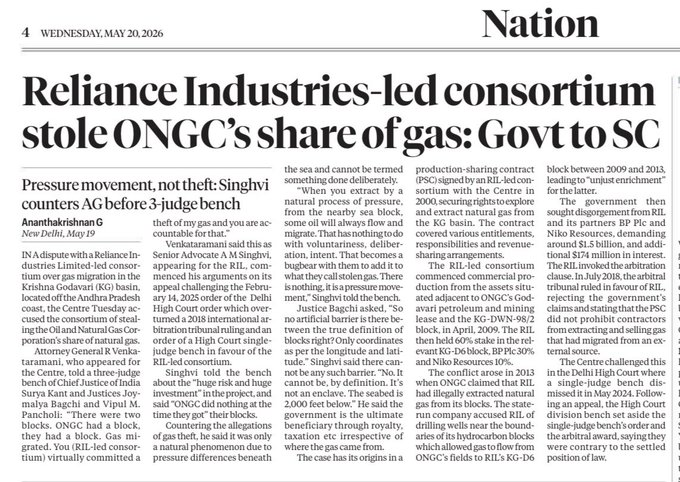
क्या राजस्थान में क्रूड रिफाइनरी को रोकने के लिए दशकों से संस्थागत षड्यंत्र जारी है?

बाड़मेर की रेतीली धरती के नीचे दबा तेल भारत के कुल घरेलू कच्चे तेल उत्पादन का एक चौथाई हिस्सा है। यह संख्या अपने आप में असाधारण है देश के एक ज़िले की ज़मीन से निकलता है पूरे देश का एक चौथाई तेल। लेकिन इससे भी असाधारण यह है कि इस तेल के उत्पादन के सत्रह साल (2009 से 2026) बाद भी राजस्थान के पास अपनी एक भी रिफाइनरी नहीं है।

कहानी शुरू होती है मई 1995 से, जब RJ-ON-90/1 ब्लॉक शेल इंडिया कंपनी को आवंटित हुआ इसके बाद भारत सरकार, शेल इंडिया और ONGC के बीच प्रोडक्शन शेयरिंग कांट्रैक्ट(PSC) साइन हुआ। 1998 से 2003 के बीच शेल इंडिया की हिस्सेदारी केयर्न एनर्जी को हस्तांतरित हुई। 1999 में पहली खोज हुई और जुलाई 1999 से नवंबर 2008 के बीच कुल 25 हाइड्रोकार्बन खोजें हुई जिसमे 21 तेल और 4 गैस खोज शामिल थी। इतनी समृद्ध खोजें, इतनी बड़ी संभावना। लेकिन इसी दौरान देरी की एक समानांतर कहानी भी चल रही थी, प्रोडक्शन शेयरिंग कांट्रैक्ट(PSC) में एक्सप्लोरेशन अवधि सात वर्ष की थी जो 14 मई 2002 को समाप्त होनी थी। भारत सरकार ने जून 2002 में 36 महीने का एक्सटेंशन दिया। फिर जून 2005 में 18 महीने का और एक्सटेंशन दिया गया । फिर दिसंबर 2006 में और छह महीने का अनुरोध आया लेकिन अबकी बार डायरेक्टर हाइड्रोकार्बन ने इसकी अनुशंसा नहीं की, क्योंकि जिस काम के लिए पिछला एक्सटेंशन माँगा गया था वह पहले ही पूरा हो चुका था। लेकिन पेट्रोलियम मिनिस्ट्री (MoPNG) ने मई 2007 में यह एक्सटेंशन भी दे दिया। 15 नवंबर 2006 से 8 मई 2007 के बीच के छह महीने किसी फ़ॉरमल एक्सटेंशन के बिना ऑपरेटर बिना वैलिड कांट्रैक्ट के काम करता रहा और सरकार देखती रही। इसके अलावा मूल 11,108 वर्ग किमी अनुबंध क्षेत्र में से 1,935 वर्ग किमी का क्षेत्र जो न खोज क्षेत्र था और न ही विकास क्षेत्र सिर्फ़ इसलिए 7 नवंबर 2007 तक अनियमित रूप से रोका गया क्योंकि ऑपरेटर ने समय पर नक्शे जमा नहीं किए। सरकारी देरी को पार्ट ऑफ़ प्रोसेस बता कर निहितार्थ व्यावसायिक लाभों पर चुप्पी साध ली और हर उल्लंघन के बाद यही दोहराया गया

यह इस पूरी कहानी का सबसे चौंकाने वाला अध्याय सरकारी रिफायनरी द्वारा क्रूड नहीं उठाना है। भारत सरकार (GoI) ने (फरवरी 2008 में) कच्चे तेल की निकासी के लिए कई सरकारी रिफाइनरियों को नामित करने का फैसला किया। PSU रिफाइनरियों, यानी IOCL, HPCL, BPCL और MRPL ने भी (अक्टूबर 2008 में) भारत सरकार को बताया था कि वे इस ब्लॉक से अनुमानित 7.5 से 8.75 MMTPA उत्पादन के मुकाबले 3.5 से 4.2 MMTPA तक तेल ले सकती हैं। MRPL के हिस्से 0.60 एमएमटी HPCL के हिस्से 0.80 एमएमटी और IOCL के हिस्से 3.20 MMTPA क्रूड उठाने की लक्ष्य तय हुआ। HPCL ने अपने हिस्से के 0.80 एमएमटी के एवज़ में शून्य क्रूड उठाया। तीन वर्षों में कुल 4.60 MMT के आवंटन के विरुद्ध केवल मात्र 1.67 MMT यानी 36 प्रतिशत क्रूड उठाया गया और इस 36 प्रतिशत में भी HPCL का योगदान शून्य था।

सार्वजनिक PSU रिफाइनरियों के उठाव न करने का परिणाम यह हुआ कि भारत सरकार ने अक्टूबर 2009 में केयर्न को “मार्केटिंग फ्रीडम” दे दी। वह छूट जो राजस्थान क्रूड की हाई विस्कॉसिटी के कारण PSUs को मिलनी थी, वह रिलायंस और एस्सार को मिलने लगी। 2009-10 से 2011-12 के बीच कुल क्रूड उत्पादन का 51.11 से 87.57 प्रतिशत तक निजी रिफाइनरियों को गया। पाँच वर्षों में अनुमानित 250 मिलियन बैरल में से 80 प्रतिशत से अधिक क्रूड निजी कंपनियों को गया।

उत्पादन के चार साल बाद 2013 में HPCL को 7 मिलियन टन क्षमता की रिफाइनरी की ज़िम्मेदारी पर “विचार” शुरू हुआ। 2018 में राजस्थान सरकार और HPCL के बीच MOU हुआ। फिर भूमि अधिग्रहण के विवाद, वित्तीय मॉडल पर खींचतान, राज्य-केंद्र हिस्सेदारी की बहस, कोविड का हवाला, लागत वृद्धि का तर्क, डिज़ाइन बदलाव का कारण हर साल एक नई देरी, हर देरी के साथ एक नई वजह गढ़ती चली गई।

पूरी कहानी में जो सबसे स्पष्ट है, वह है निजी कंपनियों को लाभ का प्रवाह।इस नुकसान की भरपाई का कोई क़ानूनी रास्ता नहीं खोजा गया जो गया सो गया और जो तय करना था वह जानबूझकर अधूरा रखा गया। इस पूरे समीकरण में राजस्थान को क्या मिला? रॉयल्टी और प्रॉफिट पेट्रोलियम का वह हिस्सा जो अंतरिम मूल्य पर आधारित था जिसे भारत सरकार ने कभी अनुमोदित नहीं किया। कोई रिफाइनरी नहीं, कोई उद्योग नहीं, कोई बड़े पैमाने पर रोज़गार नहीं, कोई वैल्यू एडिशन नहीं। एक प्रतिष्ठित ऊर्जा विशेषज्ञ के अनुसार वह यह मानने से इनकार नहीं करते कि PSU का निजी क्षेत्र के साथ मिलकर क्रूड न उठाने की साज़िश में शामिल होना संभव है

The Consumer Angle: Fixed Charges, Not Just Electricity

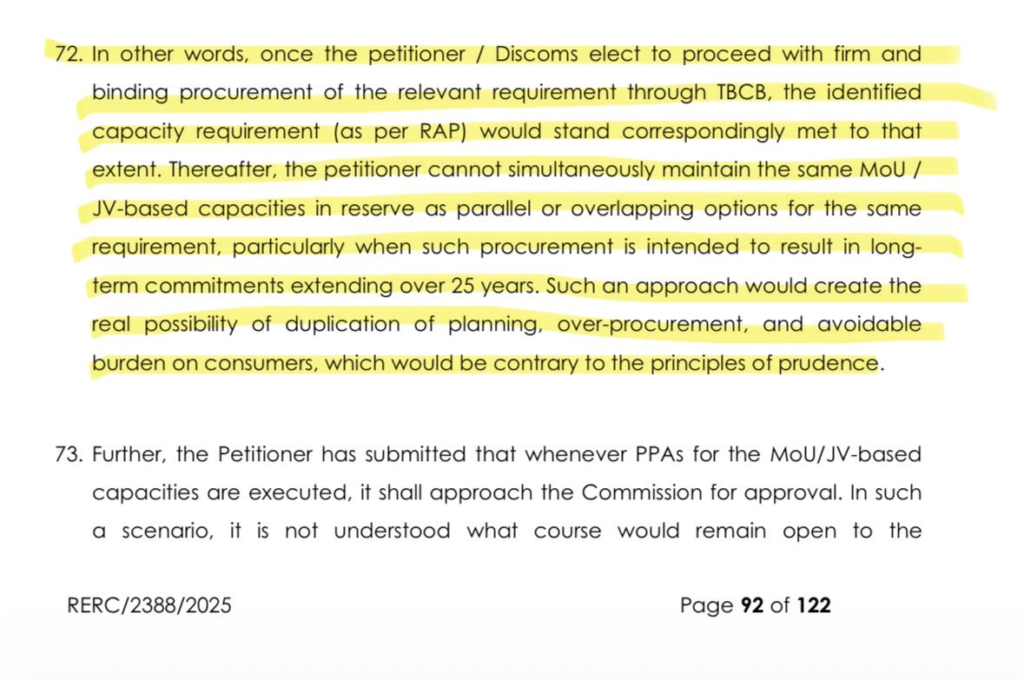
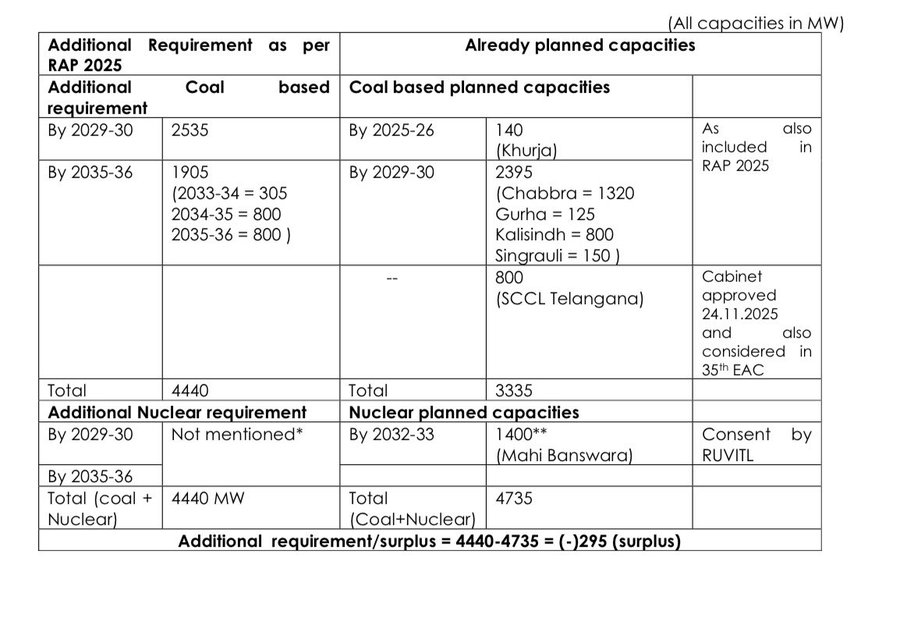
For ordinary consumers and industries in Rajasthan, this is not a dry regulatory argument. The Commission’s concern throughout the order is about fixed charges the capacity payments that consumers must pay regardless of whether the power is actually used. A 25-year PPA for 3,200 MW means Rajasthan’s Discoms will be obligated to pay fixed charges to the developer for a quarter century, regardless of actual demand or the cost of power available from other sources. If the state simultaneously holds MoU-based obligations for 3,335 MW of coal, plus 1,400 MW of nuclear, AND 3,200 MW of new TBCB thermal with significant overlap in timing consumers could end up paying for three parallel sets of fixed charges against the same demand requirement. “Such an approach would create the real possibility of duplication of planning, over-procurement, and avoidable burden on consumers, which would be contrary to the principles of prudence.” (Pic 3) RERC is also flagging a structural shift: by FY 2035-36, coal’s share in Rajasthan’s generation mix is projected to decline from ~60% today to ~40%. New BESS (battery storage) regulations are in force. Rooftop solar and net metering schemes are expected to moderate Discom demand. Locking in a 25-year coal PPA in this environment, without first exhausting cheaper alternatives, may not serve consumer interest. This Order Does Not Say “No Coal, Ever” It is important to be clear about what RERC has and has not decided. The Commission explicitly stated (para 137, Pic 4) that it has “no quarrel with the proposition that adequate coal-based / firm and dispatchable RTC power is necessary for maintaining grid stability.” It has also acknowledged the genuine peak-time challenge that solar cannot address. What RERC is rejecting is this particular procurement, at this scale, at this time, without the required analytical groundwork. The Commission has, if anything, encouraged the MoU/JV route noting that projects like the SCCL Telangana capacity (Cabinet-approved, with credible CPSU counterparties) should be fast-tracked rather than abandoned. It has also opened the possibility of a shorter 10-12 year PPA instead of 25 years, should TBCB eventually be justified. The message is not “stop planning for thermal power.” The message is: plan rigorously, disclose fully, and procure only what is genuinely needed.

Rajasthan’s 3,200 MW Coal Power Bid: Why the Regulator Said “No” Again

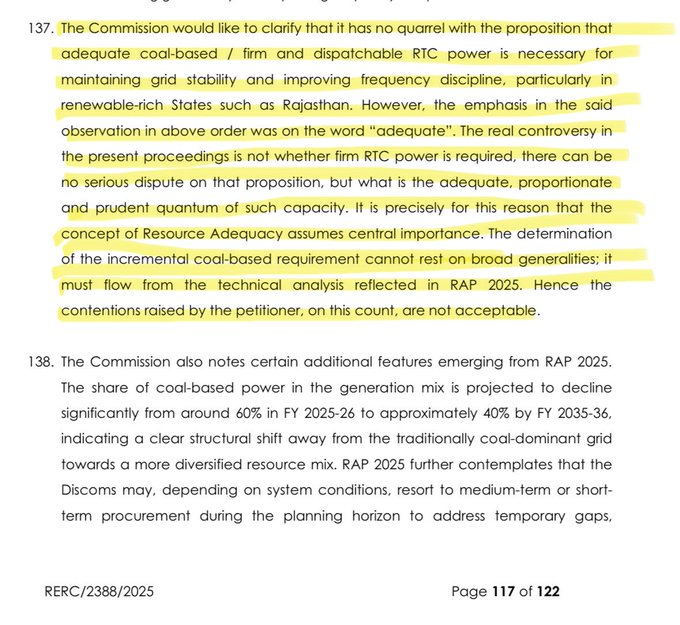
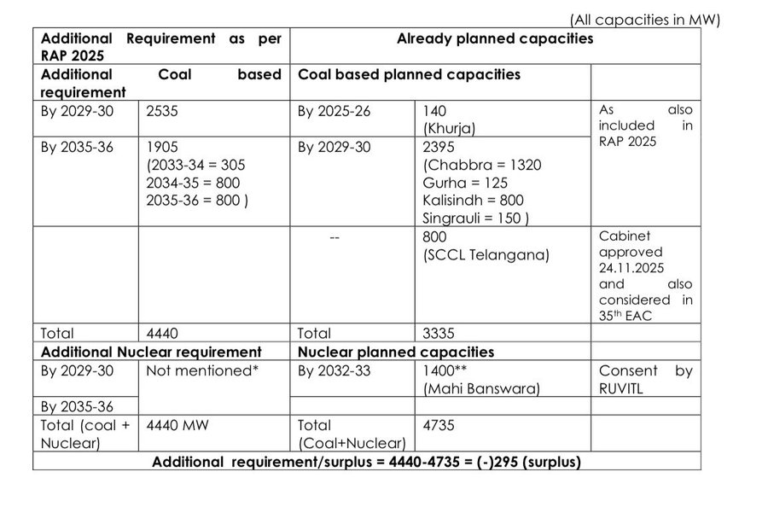
Rajasthan Urja Vikas & IT Services Limited (RUVITL) the state’s bulk power procurement agency wanted to lock in 3,200 MW of new coal-based electricity for 25 years through a competitive bidding process. The Rajasthan Electricity Regulatory Commission (RERC) said no in November 2025. RUVITL went back, armed with a clarification from India’s apex technical body (CEA), and filed a review petition. On 15 May 2026, RERC said No again. This report explains what happened, why the regulator is right to push back, and what the state government must actually do before this procurement can proceed. What Was RUVITL Trying to Do? Rajasthan’s electricity demand has been growing fast roughly 7.5% annually over the decade before 2025. As the state’s share of solar power grows (it is among the top solar states in India), there is a genuine concern about having enough firm, round-the-clock (RTC) power available when the sun is not shining during morning peak hours (7–10 AM) and evening peak hours (6–11 PM). RUVITL proposed solving this by procuring 3,200 MW (four units of 800 MW each) of coal-based thermal power on a 25-year Design-Build-Finance-Own-Operate (DBFOO) basis through a Tariff-Based Competitive Bidding (TBCB) process. The project had a confirmed coal linkage under the central government’s SHAKTI B(iv) policy a rare and valuable commodity. RERC rejected this proposal in November 2025. RUVITL then filed a Review Petition citing new evidence from the Central Electricity Authority (CEA). On 15 May 2026, RERC disposed of this review petition as well reaffirming and substantially strengthening the original rejection. Is There Actually a 3,200 MW Shortage? This is the central disagreement. RUVITL said yes. RERC, after careful analysis, said: not demonstrated on current data. The Commission’s analysis was built on CEA’s own Resource Adequacy Plan (RAP) 2025 for Rajasthan, which projects how much additional coal-based capacity the state needs from FY 2025-26 to FY 2035-36. The key number: 4,440 MW of additional coal capacity is required over the decade. But how much of that 4,440 MW is already in the pipeline? The Commission added it all up:(Pic 1) In plain terms: the state already has plans in place through a mix of joint ventures, MoUs, and a nuclear power allocation that together cover and slightly exceed the assessed need. There is no demonstrated residual gap that would justify locking consumers into an additional 3,200 MW for 25 years right now. What RUVITL Argued and Why RERC Disagreed 1. “The MoU projects are unreliable they shouldn’t be counted” :- RUVITL argued that projects agreed through Memoranda of Understanding (MoUs) like the Chhabra extension with NTPC are still at early stages and cannot be treated as firm capacity. RERC disagreed: these projects were reported by Rajasthan itself to CEA as planned capacity. The SCCL Telangana project had even received Cabinet approval by November 2025 a fact RUVITL never disclosed to CEA when seeking its ‘clarification.’ 2. “The Mahi-Banswara nuclear plant is too uncertain to count” :- RUVITL argued the Mahi-Banswara nuclear project (1,400 MW) has a long gestation period and shouldn’t factor into planning. RERC found this untenable: RUVITL had already given formal consent for 1,400 MW from this project back in 2022. The project has received administrative approval and is projected to commission by FY 2032-33 within the 10-year planning horizon. Critically, this consent was never disclosed to CEA when RUVITL asked it for a ‘clarification’ a material omission the Commission explicitly called out.
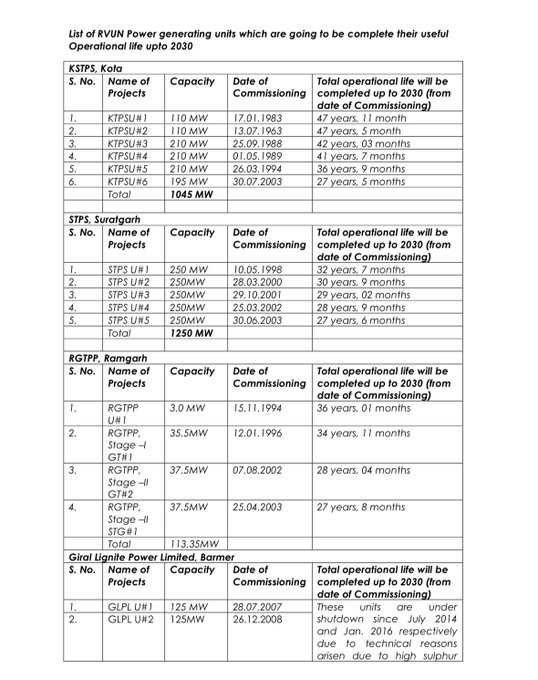
3. “1,350 MW of old plants will retire, this creates a gap” :- RUVITL argued that old units at Kota Thermal (KTPS) and Suratgarh (STPS) totalling 1,350 MW would retire post-2030, creating additional demand for new capacity. RERC found this unsustainable: RVUNL itself wrote to CEA in March 2026 saying no retirement decision has been finalised, and that any such decision would be taken only in/after 2030 subject to prevailing demand and government approvals. RUVITL built its case on a retirement assumption its own sister company won’t confirm. (Pic 2) 4. “CEA has now confirmed 4,440 MW is needed so 3,200 MW is justified” :- After the November 2025 rejection, RUVITL went to CEA, got a letter confirming the 4,440 MW total requirement, and filed a review. RERC read CEA’s letter carefully and found it does not say what RUVITL claims. CEA confirmed 4,440 MW total but 2,535 MW is already planned. CEA retained all MoU/JV capacities in the framework. CEA said the choice of route (MoU vs. competitive bidding) lies with the Discoms. At no point did CEA endorse 3,200 MW TBCB as justified on current data. A Letter Built on Incomplete Facts There is a procedural dimension to this order that deserves attention. When RUVITL wrote to CEA on 24 November 2025 seeking a ‘clarification’ on the coal capacity requirement, it omitted two critical facts: WHAT RUVITL DID NOT TELL CEA 1. The SCCL Telangana capacity (800 MW) had already received Cabinet approval on 19 November 2025 just five days before RUVITL’s letter. RUVITL’s letter made no mention of this. The Commission called this a material non-disclosure. 2. RUVITL had already given formal consent in November 2022 for 1,400 MW allocation from the Mahi-Banswara Nuclear Power Project. This consent was not mentioned in the letter to CEA. CEA therefore could not factor in this nuclear capacity when responding. 3. Because the factual premise on which CEA’s 27 November 2025 clarification was sought was incomplete, the Commission found that CEA’s reply could not be treated as a clean endorsement of RUVITL’s proposal. Had these disclosures been made, the total planned capacity figure would have been even higher making the residual gap argument even weaker. What Must Happen Before TBCB Can Proceed RERC has not permanently closed the door on thermal procurement. But it has set out a clear sequence of steps that must be completed first. In the Commission’s own words (para 114), the Discoms may pursue TBCB if they go through this process: 1Clear Decision on MoU/JV Capacities The Discoms must take a definitive, officially approved decision on which MoU/JV projects to retain in the planning basket and which to formally cancel. Cancellation requires competent authority approval at the same level including Cabinet-level clearance where applicable. Tentative preferences are not enough. 2. Techno-Economic Assessment and Formal Decision on Retirements RVUNL must conduct a detailed techno-economic study of the plants proposed for retirement (KTPS and STPS units). This must cover plant condition, R&M alternatives, cost comparison, and environmental compliance. Only after this can retirement be treated as a firm planning assumption. 3. Independent Socio-Economic and Cost-Benefit Study on Plant Location If the proposed plant is to be located within Rajasthan (rather than near coal mines in eastern India), RUVITL must commission a study quantifying the tariff impact. Stakeholders estimate coal transport adds 15-20% to the cost of power generated; this claim must be tested. 4. Fresh Residual Gap Assessment After the above steps, calculate the actual residual gap using the formula: [4,440 MW total requirement] minus [retained planned capacities] minus [confirmed nuclear allocation] plus [finally confirmed retirement MW]. Also factor in the Planning Reserve Margin per MoP Resource Adequacy Guidelines 2023.